Bushfire Season 2026: What Melbourne Homeowners Need to Know About Their Windows
El Nino conditions are now established across the Pacific, and according to the Bureau of Meteorology, much of eastern Australia is facing a hotter and drier spring than average. Hazard reduction burns are already underway across Victoria and New South Wales, and fire authorities are warning that the 2026-27 season could be one of the most demanding in years. For homeowners on Melbourne’s urban fringe, in the Dandenong Ranges, the Yarra Valley, and the Mornington Peninsula, the preparation window is open right now.
Across the border, the NSW Rural Fire Service has been direct with residents: land that burnt during the 2019-2020 Black Summer has recovered enough fuel to carry serious fire again. That same recovery is happening across Victorian bushland. Hazard reduction programs are ramping up to close the gap, but controlled burns depend on narrow weather windows, and authorities have been clear that they cannot treat every hectare before the season peaks.
What the fire season outlook means for Melbourne homeowners
If your property sits within a designated Bushfire Attack Level zone, your windows and doors are the weakest point in your home’s fire defence. This is not a marketing claim. It is a structural reality that fire authorities and building assessors have documented for decades.
Glass fails before brick, render, or cladding. A standard single-pane window can crack under radiant heat exposure well before a fire front reaches the property line. Once the glass fails, embers enter the building envelope and internal ignition follows within minutes. The window is not the last line of defence. It is the first one to be tested.
For Melbourne homeowners in the Dandenong Ranges, the Yarra Valley, the Mornington Peninsula, and the outer northern and western growth corridors, that reality shapes what preparation actually looks like. Clearing gutters and trimming vegetation address the fuel around your home. The glazing is what determines whether the home itself holds.
For a detailed breakdown of the 2026 Victorian outlook and the specific risk zones flagged by AFAC, see our earlier guide on preparing your home’s glazing for bushfire season 2026.
What is BAL 40 and why it matters
Bushfire Attack Level ratings are set under Australian Standard AS 3959. They describe the radiant heat exposure a site is likely to experience, based on vegetation type, slope, and distance from fuel. The rating assigned to your property determines the construction standard your windows and doors must meet.
| BAL Rating | Radiant Heat Exposure | What It Means for Glazing |
|---|---|---|
| BAL-12.5 | Up to 12.5 kW/m2 | Basic ember protection required |
| BAL-19 | Up to 19 kW/m2 | Increased glazing requirements |
| BAL-29 | Up to 29 kW/m2 | Toughened glass and tested frame performance required |
| BAL-40 | Up to 40 kW/m2 | Very high risk. Full system performance tested |
| BAL-FZ | Above 40 kW/m2 | Flame Zone. Specialist construction only |
BAL 40 is the second-highest classification under the standard. It applies to sites where a fire front is likely to expose the building face to sustained radiant heat of up to 40 kilowatts per square metre, combined with ember attack and the possibility of direct flame contact. Windows certified to this level have been tested as complete assemblies, not just as glass panels.
If your property has been assigned BAL 29 or BAL 40, your replacement windows and doors must meet that standard under a building permit. Homes built before the 2018 revision of AS 3959 often do not meet them.
Why uPVC double glazing holds up where other frames don’t
The frame material matters as much as the glass. Aluminium frames are known to conduct heat through the profile and into the surrounding structure. Under sustained radiant heat, that conductivity accelerates the rate at which the frame deforms and the seal around the glass is compromised. Once the seal gaps, embers find their way in.
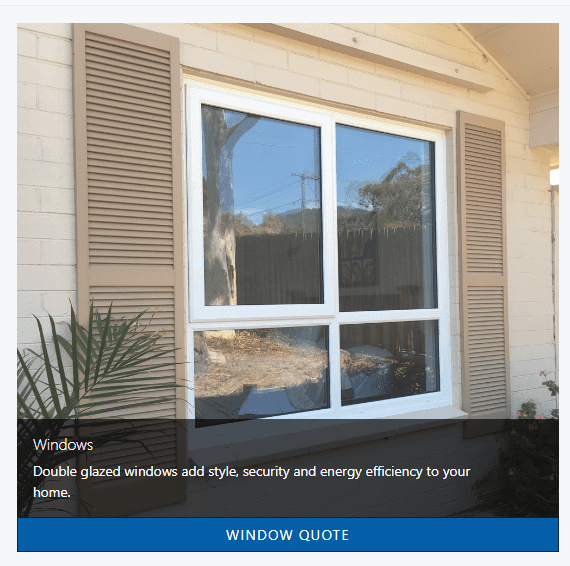
uPVC behaves differently. It does not conduct heat the way aluminium does, so the frame maintains its geometry and its compression seal for longer under load. Ecostar’s uPVC double glazed windows use a multi-chamber profile reinforced with marine-grade stainless steel, which holds the sash against the frame and keeps ember entry points closed.
The double glazed unit itself also plays a role. Two panes of glass separated by an argon-filled cavity slow the transfer of radiant heat into the home.
That does not make the window fireproof. It buys time, and in a bushfire, time is the resource that matters most.
Ventilation openings deserve the same attention as fixed glazing. uPVC double glazed awning windows seal tightly against the frame when closed, which limits the path for ember and smoke intrusion compared with sliding or louvre alternatives. Entry points matter just as much, and uPVC double glazed doors are rated up to BAL 40.
Frequently asked questions
Are bushfires getting worse in Australia?
Fire authorities including the CFA and the NSW RFS point to longer and less predictable fire seasons, driven by drier fuels and extended periods of above-average temperature. The Bureau of Meteorology has confirmed El Nino conditions are established, which typically brings hotter and drier than average conditions to eastern Australia. The result is a narrower window for safe hazard reduction and a wider window of fire risk.
What months are fire season in Australia?
Fire season varies by region. In Victoria, the CFA declares the Fire Danger Period for each municipality based on local fuel and weather conditions, typically running from November through to April. Northern parts of the state often enter the period earlier. The declared dates shift year to year, so the practical answer is to check your local council’s current Fire Danger Period rather than work to a fixed calendar.
Where in Victoria is most prone to bushfires?
The highest-risk areas sit where dense vegetation meets residential development. For Melbourne homeowners that means the Dandenong Ranges, the Yarra Valley, the Mornington Peninsula, the Macedon Ranges, and the outer northern and western growth corridors. Regional centres including Gippsland and the south-west also carry elevated risk. The specific exposure of any individual property is determined by its BAL assessment, not by suburb alone.
What does BAL 40 mean for my windows?
BAL 40 is the second-highest rating under AS 3959. It means your windows and doors must be tested and certified to withstand radiant heat exposure of up to 40 kilowatts per square metre, along with ember attack and the potential for direct flame contact. It is a full assembly standard, covering frame, glass, seals, and hardware together. Ecostar’s uPVC double glazed windows and doors are rated up to BAL 40.
For Melbourne homeowners, Ecostar Double Glazing manufactures and installs uPVC double glazed windows and doors rated up to BAL 40. Manufacturing since 1979, with installations across Victoria, South Australia, Tasmania, New South Wales, and the ACT.
Share
More News
Double Glazing or Secondary Glazing: What’s the Difference?
Bushfire Season 2026 Is Starting Earlier – Is Your Home’s Glazing Ready?
Are Your New Windows Actually Safe? What Australian Homeowners Need to Know
Condensation on Windows: Why It Happens and How to Stop It